Start with the actual detector
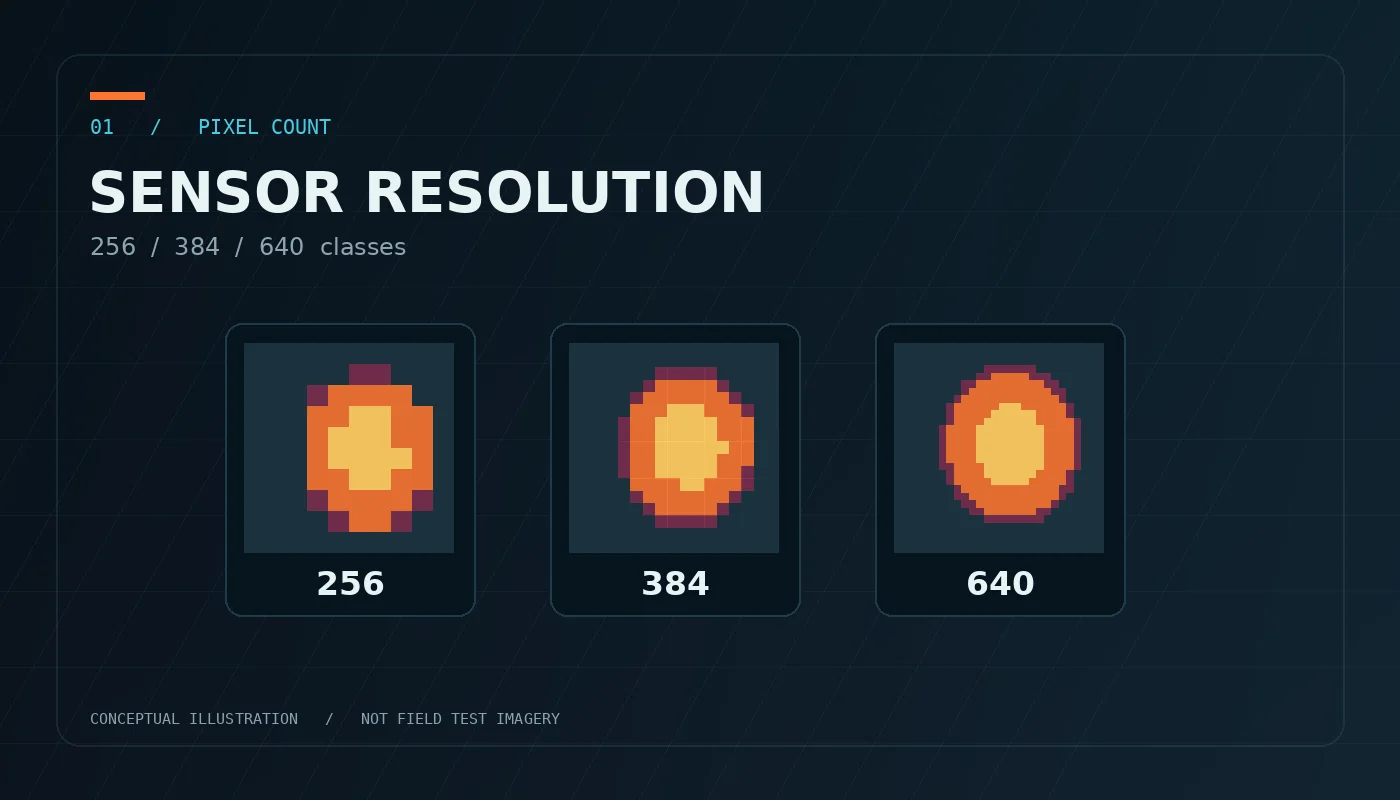
Thermal resolution describes the number of detector samples in a scene. A 256 × 192 detector has 49,152 samples, a 384 × 288 detector has 110,592, and a 640 × 480 detector has 307,200. More native detector samples provide more spatial information before digital enlargement, but do not, by themselves, guarantee a better final image.
Marketing often blurs three different numbers: native thermal sensor resolution, output display resolution, and upscaled or enhanced image size. These are not interchangeable. A 1024-pixel display cannot give a 256-pixel thermal detector the same native scene detail as a genuine higher-resolution detector.
What the resolution comparison misses
Field of view, lens focal length, optical transmission, pixel pitch, calibration, processing and thermal sensitivity affect what the instrument shows. Two 640-class products can behave differently despite sharing a headline resolution. That is why a reliable comparison asks for the exact detector dimensions and the corresponding optical specifications, not just a model suffix.
What to record when comparing listings
- Native detector width and height, not the display resolution.
- Lens focal length and the published horizontal field of view.
- NETD in mK, including the stated measurement conditions.
- Base optical magnification versus digital enlargement.
- Whether the listed resolution refers to a product variant.
In our catalog, a “640-class” badge is a navigation aid derived from a verified listing or model designation. It is not an independently measured technical claim. Always check the manufacturer's exact variant specification.
Primary references
The technical context for this guide includes the source reference. We do not reproduce supplier reviews or imply firsthand testing.